Considering a master-planned community in Buckeye but not sure what that really means for your day-to-day life and your budget? You are not alone. With Buckeye’s rapid growth and several large communities underway, it helps to understand how these neighborhoods are designed, governed, and maintained before you tour a model home. This guide breaks down how master-planned living works in Buckeye, what to expect from HOAs and design review, and the key questions to ask so you can choose with confidence. Let’s dive in.
What a master-planned community is
A master-planned community is a large, long-term residential development built around a coordinated plan. Instead of a single subdivision, an MPC integrates homes with amenities, open space, and often retail or civic sites.
Common elements you will see include:
- Parks, playgrounds, and multiuse trails
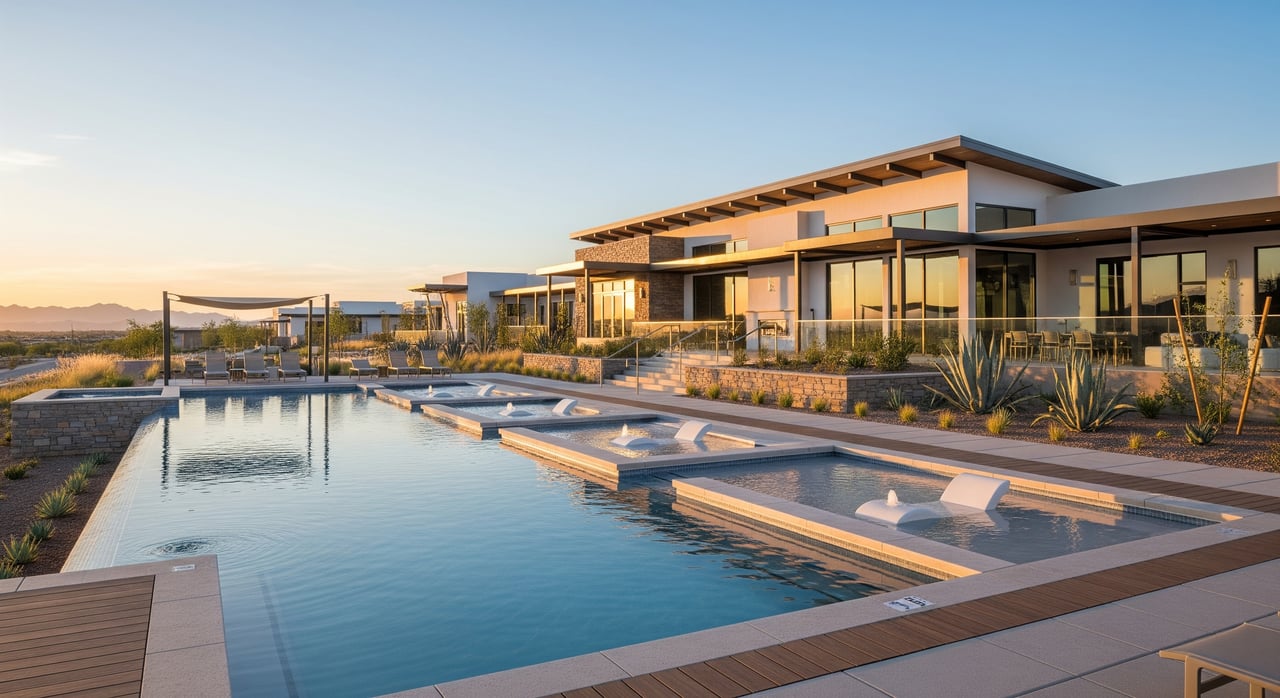
- Community centers, pools, and fitness or sport areas
- Planned retail or a town-center style hub
- On-site or planned school sites and organized community events
- Design guidelines that shape architecture, landscaping, and streetscapes
How this differs from a standard subdivision:
- Scale and coordination: MPCs roll out in phases over years with a long-term plan. Typical subdivisions are smaller and more limited in scope.
- Mixed uses: MPCs often set aside land for shops or civic uses. Many subdivisions remain residential only.
- Governance and amenities: MPCs typically use homeowner associations to manage shared amenities and rules, with more robust systems than many smaller neighborhoods.
- Design control: MPCs commonly have architectural standards and a formal design review process to keep a consistent look and feel.
How Buckeye MPCs are built
Buckeye is one of the fastest-growing cities in the Phoenix metro. The U.S. Census counted 91,502 residents in 2020, and that growth fuels new master-planned communities across the West Valley. Large MPCs in Buckeye must meet the city’s general plan, zoning, and infrastructure requirements for roads, water, sewer, and drainage.
Build-out is phased. You should expect ongoing construction and changes as vacant parcels develop over time. Many communities include amenity clusters, trail networks, and planned mixed-use nodes to create a neighborhood hub. Events and programming are common, which helps residents connect and use the amenities.
For illustrative context, some Buckeye communities, such as Verrado, are known for planned main-street style areas, parks, and a strong design framework. Specific amenity lists and timelines vary by community, so verify what is complete today versus planned for future phases.
HOA governance and your role
Most master-planned communities form a homeowners association to manage common areas and enforce the covenants, conditions, and restrictions, often called CC&Rs. A homeowner-elected board oversees budgets, maintenance, and rule enforcement. Arizona law addresses planned communities and association powers in Title 33 of the Arizona Revised Statutes.
What the HOA handles:
- Operations and upkeep of parks, trails, pools, and common areas
- Management, insurance, and utilities for shared spaces
- Rule enforcement based on CC&Rs and policies adopted by the board
- Budgeting and reserves for larger repairs and replacements
Your responsibilities typically include paying assessments on time, following community rules, and seeking approval for exterior changes. Most MPCs use a Design Review Committee or Architectural Review Committee to review projects like exterior paint, landscaping, fences, and additions. Timelines and submittal requirements should be spelled out in the CC&Rs and design guidelines.
Costs and dues to expect
HOA dues vary based on the scale of amenities and services. Dues fund operations, insurance, utilities for common areas, and reserves for capital projects. A well-run association budgets for a reserve fund and may complete a reserve study to plan for major repairs. This helps reduce the risk of special assessments, though they can still occur if unexpected costs arise.
Before you commit, ask for:
- Current HOA dues and what they cover, including any master and sub-association layers
- The most recent budget and reserve information
- A history of any special assessments over the last 5 to 10 years
- Fee schedules for design review, amenity passes, or document requests
Utilities are another line item to review. Confirm which providers serve the community and whether any special utility assessments or metering changes are planned.
Lifestyle fit: pros and cons
Pros:
- Integrated amenities and community events that support an active lifestyle
- Consistent design standards that can help protect property values
- Planned infrastructure and, in some cases, on-site retail or school sites
- Professional management for common-area maintenance
Cons:
- Monthly dues and the possibility of special assessments
- Design controls that limit exterior changes and customization
- Long build-out timelines that bring ongoing construction and traffic shifts
- Rules and enforcement that may feel strict depending on the association
West Valley realities to weigh
Commute and connectivity matter in Buckeye. Your drive time can vary based on proximity to I-10, Loop 303, and employment centers around the West Valley and Phoenix. Try your commute during peak hours before you choose a lot.
Water and landscaping are central to life in the Sonoran Desert. Many MPCs encourage desert-appropriate, water-wise plants and irrigation. Ask about the community’s landscaping rules, irrigation systems for common areas, and any homeowner maintenance standards.
Schools and services can be planned as part of MPCs, but assignments and capacity are set by local districts. Verify current school boundaries and transportation options directly with the districts that serve your chosen neighborhood.
Future development is part of the master plan. Ask where future phases, streets, and commercial nodes will go, and what that means for traffic, views, and noise near your lot over time.
Buying in an MPC: step-by-step
Use this simple process to move from browsing to confident decision:
- Define your must-haves. List the amenities, trails, and features that matter most, plus commute and lot preferences.
- Align your budget. Consider HOA dues, expected maintenance, and reserves. Get pre-approved so builders or sellers know you are ready.
- Review CC&Rs early. Read the rules, rental policies, pet limits, parking rules, and design guidelines before you fall in love with a lot.
- Tour completed and planned areas. Visit built amenities and ask to see maps that show future phases and commercial sites.
- Investigate governance. Learn who manages the HOA, how the board is structured, and how meetings and records work.
- Assess reserves and history. Request the latest budget, reserve planning, and any special assessment history.
- Plan for design review. Understand submittal steps, typical timelines, and common reasons for denials on exterior changes.
- Confirm utilities and services. Note providers for water, sewer, power, gas, and internet, along with any special assessments.
- Finalize with protections. For new construction, align on timelines, warranties, and community disclosures. For resale, review the HOA disclosure package in detail.
Questions to ask before touring
Bring this checklist to your first visits and model tours:
- What are current HOA dues, and what do they cover?
- Is there a recent budget and reserve study I can review? Have there been special assessments in the past 5 to 10 years?
- Can I see the CC&Rs, design guidelines, and design review timeline and fees?
- Who manages the HOA, and can I review recent meeting minutes or bylaws?
- What are the rules on rentals, short-term rentals, pets, and exterior modifications?
- What amenities are complete today, and which are planned? How are guests handled?
- What phases remain to be built, and what is the anticipated timing?
- Which utilities serve the community, and are there any special utility assessments?
- What is the typical turnaround for design review approvals?
- What are homeowner maintenance responsibilities for yards, trees, and irrigation?
- Are roads and parks privately owned by the HOA or dedicated to the city?
- Which school districts serve the area, and what transportation options are available?
- Has the association had legal disputes, insurance claims, or major litigation recently?
How Lyniset Properties helps
You deserve a clear, steady process for a decision this important. With a focus on West Valley neighborhoods and a process-driven approach, our team helps you compare communities, decode CC&Rs, and confirm budgets and reserves so there are fewer surprises.
Here is how we support you:
- Buyer and seller representation for both new construction and resale
- Relocation guidance, including military relocation support
- Pricing insights and home valuations tailored to West Valley micro-markets
- Organized timelines and checklists that keep each step on track
If you are weighing several Buckeye MPCs, we will line up tours, gather HOA documents early, and map commute and future phase impacts so you can choose the right fit with confidence. When you are ready, reach out to schedule a friendly, no-pressure consultation with Lynise Trice.
FAQs
HOA fees in Buckeye MPCs: what do they cover?
- They generally fund common-area operations, maintenance, insurance, utilities for shared spaces, and reserves for major repairs.
Design review in Arizona MPCs: how does it work?
- Most communities use a Design Review or Architectural Review Committee that must approve exterior changes based on the CC&Rs and written guidelines.
Build-out timelines in Buckeye MPCs: what should I expect?
- MPCs develop in phases over many years, so you should expect ongoing construction, changing surroundings, and traffic adjustments as new phases open.
Short-term rentals in Buckeye MPCs: are they allowed?
- Policies vary by community, so check the CC&Rs and rules to confirm whether short-term rentals are permitted and under what conditions.
Schools in Buckeye MPCs: how are assignments set?
- School sites may be planned within an MPC, but assignments and capacity are set by local districts, so verify boundaries and transportation directly with the district.
Amenities access in MPCs: residents only or public?
- Access policies vary; some amenities are residents-only while others may allow guests or fees, so review the HOA rules before you buy.