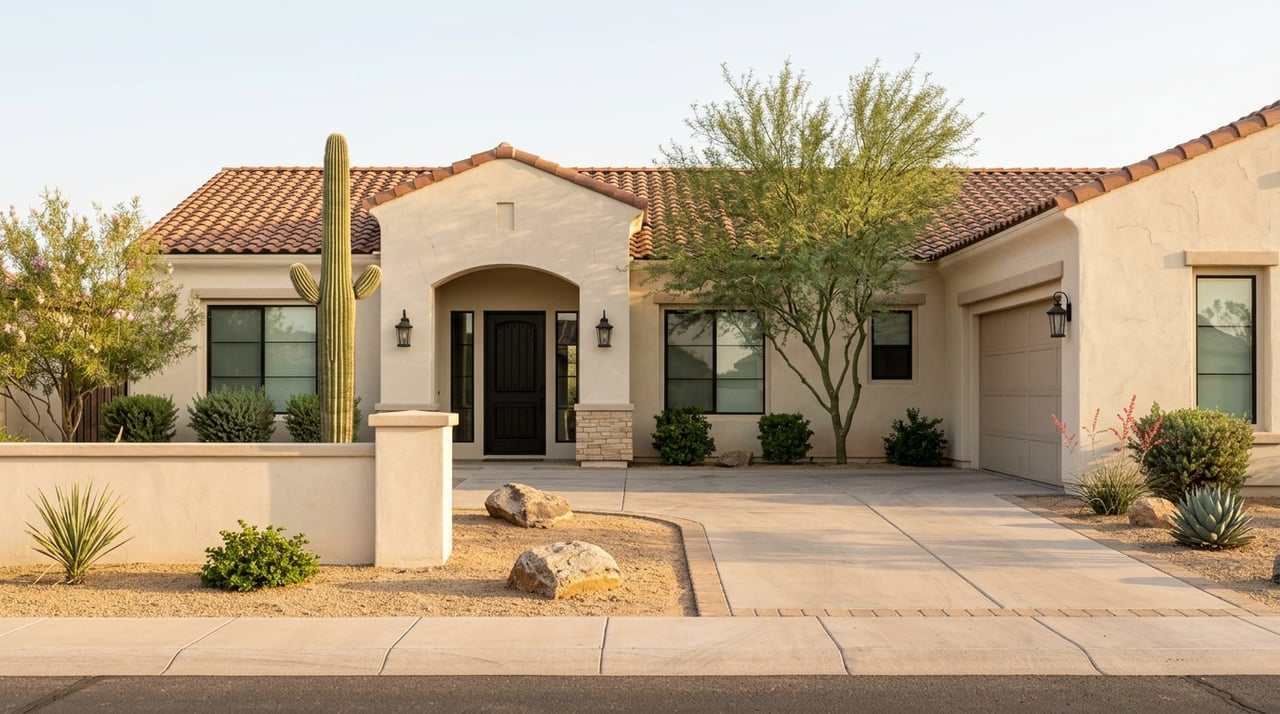
Wondering whether a West Valley address will make your Phoenix workday easier or harder? You are not alone. If you want more space, a newer home, or a suburban lifestyle but still need to reach downtown Phoenix, Sky Harbor, or another job center, the commute can shape your day as much as the house itself. This guide breaks down how West Valley commutes work, what to expect in key suburbs, and how to choose a location that fits your routine. Let’s dive in.
Why West Valley commutes vary
The West Valley is not one single commute market. Your experience depends a lot on how far west you live, where in Phoenix you need to go, and whether you commute every day or only a few times a week.
For many buyers, Interstate 10 is the main eastbound route into Phoenix. The Arizona Department of Transportation notes that commuting between the West Valley and downtown Phoenix can be a grind because of heavy traffic on I-10. ADOT also points to Loop 202 South Mountain Freeway as an alternative for some trips that would otherwise rely on I-10 through downtown.
That west-to-east pattern also shows up in commute-time data. MAG reports the Phoenix metro average commute time is 26 minutes. Census QuickFacts shows mean travel times of 33.3 minutes in Buckeye, 30.2 in Surprise, 29.6 in Goodyear, 28.5 in Peoria, and 25.9 in Litchfield Park.
What the numbers mean for buyers
Those averages help, but they do not tell the whole story. A household with one office day each week may feel very differently about a 30-plus-minute commute than someone driving into Phoenix five days a week.
That is why the best suburb for you often comes down to a few practical questions. How often do you go in? Is your destination downtown Phoenix, north Phoenix, or Sky Harbor? And do you want a backup plan like a park-and-ride, express bus, or vanpool option?
Major routes to know
I-10 is the main corridor
If you are looking in Buckeye, Goodyear, or Litchfield Park, I-10 will likely be a major part of your commute. It is the core east-west spine for many West Valley drivers heading into Phoenix.
Because so many commuters rely on it, traffic volume matters. If your schedule is fixed and your destination is central Phoenix, it helps to think carefully about how much freeway time you want built into your week.
Loop 202 can help some trips
Loop 202 South Mountain Freeway gives some drivers an alternative to the busiest part of I-10 through downtown Phoenix. That can be especially helpful if your destination is not right in the downtown core.
For buyers, this matters because two homes with similar map distances may not feel the same in real life. Route choices can change your daily routine more than the mileage alone.
Loop 101 and Loop 303 add flexibility
Loop 101 and Loop 303 are also important backbones for West Valley mobility. ADOT says Loop 101 runs from I-10 in Tolleson north through Glendale and Peoria before continuing east through Phoenix and Scottsdale.
Loop 303 runs from I-10 in Goodyear north through the West Valley. For buyers in Goodyear, Surprise, and Peoria, those routes can add flexibility when your job, errands, or airport trips do not line up neatly with a straight downtown Phoenix commute.
West Valley suburb-by-suburb guide
Litchfield Park commute overview
Litchfield Park is the closest-in option of the five suburbs covered here in a practical commute sense. The city says it is 16 miles west of downtown Phoenix and only 2 miles north of I-10.
Its mean travel time to work is 25.9 minutes, which is the shortest of the group. If your goal is to stay in the West Valley while limiting drive time, Litchfield Park stands out as a strong starting point.
For many buyers, the appeal is balance. You still get a suburban setting, but with easier I-10 access and a more moderate commute profile than farther-west choices.
Peoria commute overview
Peoria is often a strong middle-ground option for Phoenix commuters. The city’s economic development profile says Peoria is just 25 minutes from downtown, and Census QuickFacts lists a mean travel time to work of 28.5 minutes.
Peoria also benefits from broad roadway access. The city highlights connections through multiple state highways, along with access to I-10, I-17, Loop 101, and Loop 303.
That flexibility can matter if your work destination changes from week to week. If you want a suburb that feels commute-aware without moving into central Phoenix, Peoria is one of the most balanced choices in the West Valley.
Goodyear commute overview
Goodyear is one of the more commute-friendly West Valley suburbs. The city describes itself as less than 20 minutes from downtown Phoenix, and its mean travel time to work is 29.6 minutes.
Location is part of the draw. Goodyear sits close to I-10, Loop 101, and Loop 303, giving drivers more than one major corridor to work with.
For buyers with hybrid schedules, Goodyear can be especially appealing because it combines suburban living with multiple commute options. That can make office days feel more manageable over time.
Surprise commute overview
Surprise works best when your household is comfortable with a longer trip or a fixed office routine. The city’s community profile says it is just 45 minutes from downtown Phoenix and Sky Harbor International Airport.
Its mean travel time to work is 30.2 minutes, which places it on the longer side compared with Litchfield Park and Peoria. That does not make it a poor fit, but it does make planning more important.
If you only commute a few days each week, Surprise may still be a very workable option. Buyers who want a park-and-ride or a structured commute backup often find that useful here.
Buckeye commute overview
Buckeye is generally the longest-commute option in this group. It is about 30 miles west of downtown Phoenix, and Census QuickFacts lists a mean travel time to work of 33.3 minutes.
That said, Buckeye can be a smart tradeoff for buyers who want more space and can accept a bigger time commitment on the road. The city’s location on the western edge of Maricopa County means the commute is heavily freeway dependent, with I-10 serving as the main route into Phoenix.
If you are comparing home size, newer construction, and longer-term lifestyle goals, Buckeye may still make sense. The key is being realistic about how often you will need to head east.
Transit and park-and-ride options
Driving is not the only way to think about a West Valley commute. Several suburbs offer express routes, park-and-rides, or local mobility services that can support your routine.
That matters most for buyers with hybrid schedules. Even if you drive most days, having a transit fallback can reduce stress when traffic, schedules, or downtown parking become a factor.
Goodyear transit options
Goodyear highlights the 562 Goodyear Express from the Goodyear Park and Ride and the 563 Buckeye/Goodyear Express. The city also says its WeRIDE microtransit connects with multiple Valley Metro regional and express routes.
For buyers, that creates useful redundancy. You may not use transit every day, but having several ways to start or finish your trip can add real value.
Buckeye transit options
Buckeye residents can use Valley Metro’s 563 Avondale/Buckeye Express from the Jackrabbit Trail and Palm Lane park-and-ride into Avondale and Phoenix. Buckeye also offers BOLD, an on-demand local dispatch service for in-town trips.
BOLD helps with first-mile and last-mile needs, though it does not replace a Phoenix-bound commute. Still, for some buyers, that local support can make an express option easier to use.
Surprise transit options
Surprise has a dedicated Surprise Park & Ride with Valley Metro Route 571, the Surprise Express. City transit materials also reference local transportation support such as RideChoice and paratransit services.
If your office days are set and predictable, this kind of structure can help. It gives you another way to handle a longer Phoenix commute without relying on driving every time.
Peoria transit options
Peoria’s park-and-ride connects to Route 83, Route 106, and the Grand Ave Limited. The city also confirms local Dial-A-Ride support.
That setup can make Peoria especially practical for buyers who want choices. You may drive often, but the broader network gives you a backup when needed.
Hybrid work changes the equation
If you work from home part of the week, your home search can open up. A suburb that feels too far for a daily downtown trip may feel very reasonable if you only make that drive once or twice a week.
Valley Metro’s Commute Solutions program supports options like carpooling, vanpooling, biking, walking, telework, compressed work weeks, and ShareTheRide matching. Valley Metro also says its vanpool program is designed for groups of five to fifteen commuters and can reduce stress, save fuel, and allow HOV-lane use.
This is where commute strategy matters as much as suburb choice. A longer drive can be manageable when your schedule is predictable and you have a backup plan.
How to choose the right fit
When you compare West Valley suburbs, try not to focus only on a city name or straight-line distance. Instead, match the location to your real routine.
Ask yourself:
- How many days each week will you go into Phoenix?
- Is your destination downtown Phoenix, north Phoenix, or Sky Harbor?
- Are you comfortable depending mostly on I-10?
- Would a park-and-ride or express route help on office days?
- Do you want the shortest practical commute, or are you trading time for more space?
A simple way to think about it is this: Litchfield Park is the closest-in choice, Peoria offers one of the best all-around balances, Goodyear gives you strong freeway and express-bus access, Surprise works well with a planned hybrid routine, and Buckeye often means the longest drive but may offer the space tradeoff some buyers want.
Choosing the right West Valley home is not just about square footage or curb appeal. It is also about how your mornings, evenings, and workweek will feel after move-in. If you want help weighing commute patterns against home style, resale options, or new-construction choices, Lynise Trice can help you build a plan that fits your lifestyle.
FAQs
What is the shortest West Valley commute to Phoenix?
- Among the suburbs covered here, Litchfield Park has the shortest mean travel time to work at 25.9 minutes and is 16 miles west of downtown Phoenix.
Which West Valley suburb offers the best balance for Phoenix commuters?
- Peoria is often the best middle-ground option because it combines a 28.5-minute mean travel time with broad roadway access and park-and-ride connections.
Is Buckeye too far for a Phoenix commute?
- Buckeye can work for buyers who can tolerate a longer freeway-based commute or follow a fixed hybrid schedule, but it has the longest mean travel time in this group at 33.3 minutes.
Are there express bus options from the West Valley to Phoenix?
- Yes. The research report notes active West Valley express routes including 562, 563, 571, 573, and 575, with options tied to suburbs such as Goodyear, Buckeye, and Surprise.
How does hybrid work affect a West Valley home search?
- Hybrid work can make farther-west suburbs more practical because you may only need to manage peak-hour travel a few times each week instead of every day.
Which roads matter most for West Valley commutes into Phoenix?
- I-10 is the main east-west corridor, while Loop 202, Loop 101, and Loop 303 can add flexibility depending on where you live and where you work.