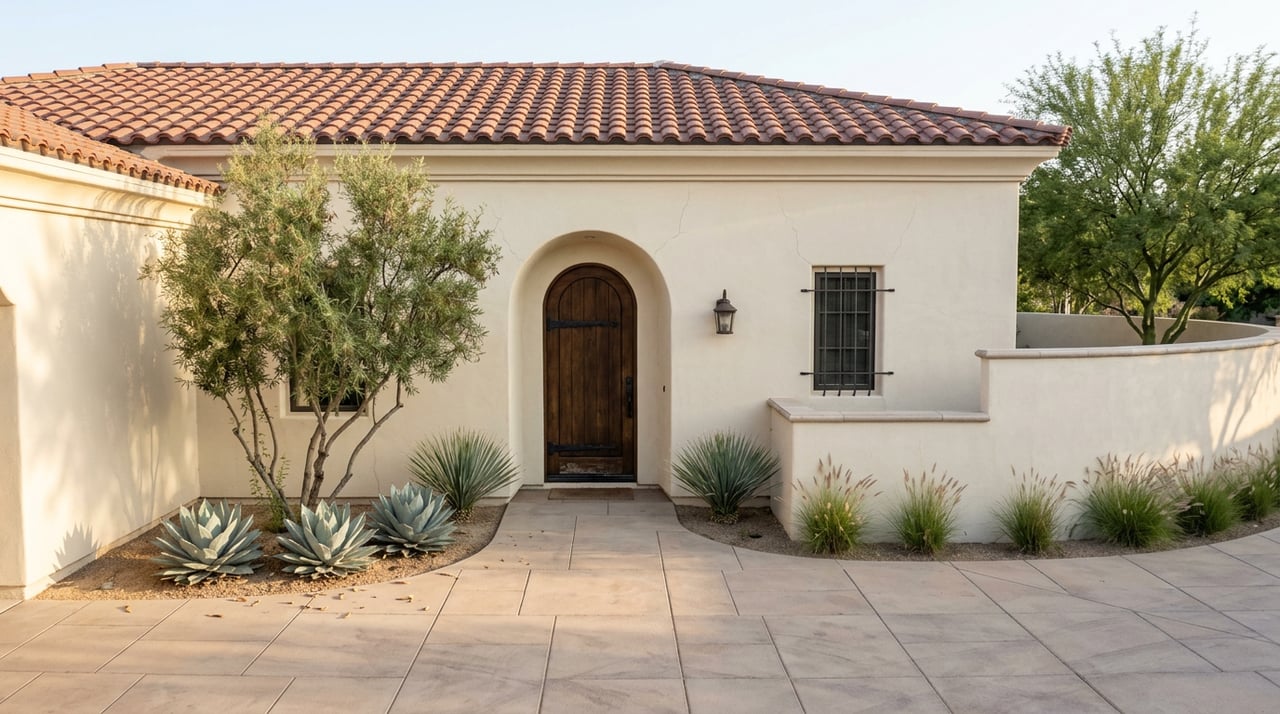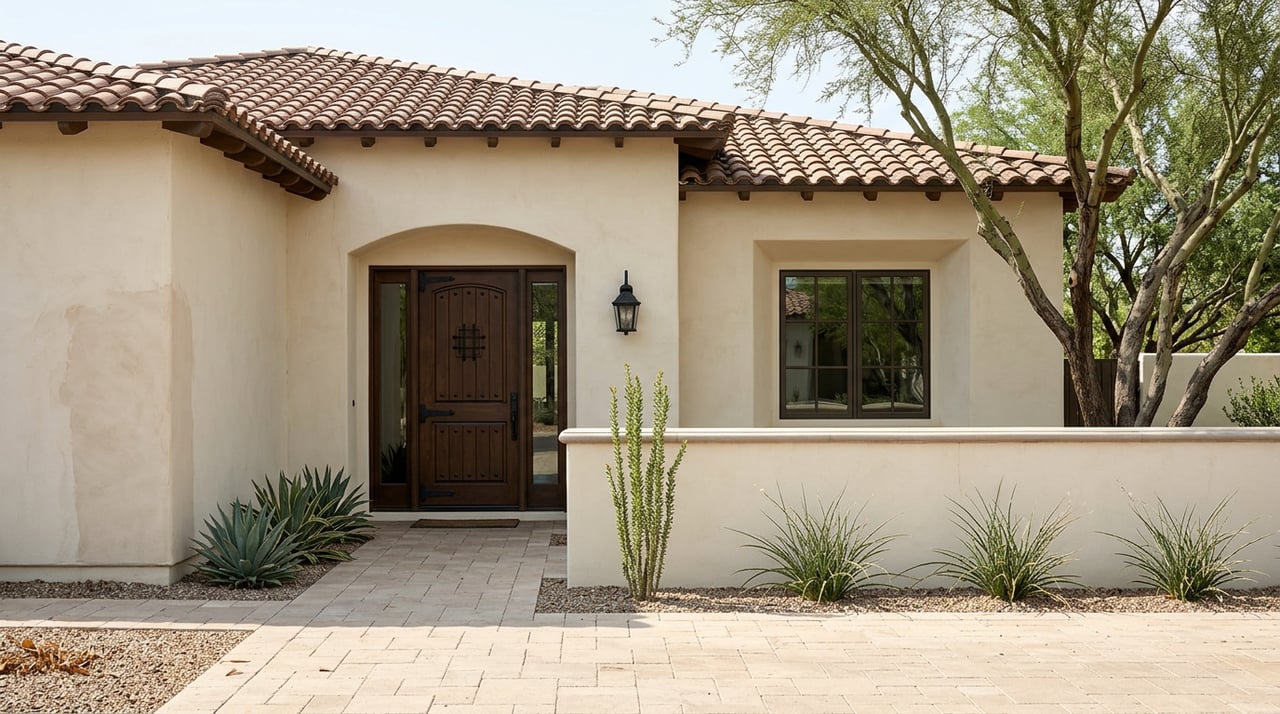
Two buyers with the same $475,000 budget are shopping in Goodyear right now. One is looking at a new build in Estrella's Montecito neighborhood, price tag softened by a builder's interest rate offer. The other is looking at an established resale near Palm Valley or The Wigwam, priced close to the same number with no incentive attached. Side by side on a spreadsheet, the monthly payments look almost identical today.
They won't in three years, and the reason has nothing to do with the mortgage rate on either loan.
What's actually sitting on the tax bill
Goodyear has ten named Community Facilities Districts layered across the city: Estrella Mountain Ranch, Goodyear Utilities #1, Goodyear General #1, Palm Valley #3, Wildflower Ranch, Wildflower Ranch #2, Cottonflower, Centerra, Cortina, and King Ranch. The city's own finance department lists them by name because they show up by name on the Maricopa County tax bill, under a line most buyers skim past labeled "Special Districts."
A CFD is not a fee and not an HOA charge. It is an ad valorem property tax, meaning it is calculated as a percentage of assessed value, collected by the Maricopa County Treasurer alongside the regular county levy. The city explains it plainly: CFDs are typically formed at a developer's request to finance the roads, water and sewer systems, drainage, and parks that a new subdivision needs before anyone can move in. The infrastructure gets built now. The bond gets repaid over decades, by the people who buy the homes.
The practical result is that Goodyear does not have one property tax rate. It has ten additional ones, each attached to a specific footprint on the map, and each one permanent for as long as the bond is outstanding.
The number that doesn't show up in a listing photo
A property tax analysis from Ownwell found that Goodyear's two ZIP codes carry noticeably different median effective tax rates: 0.67% in 85395 against 0.56% in 85338, a spread of 0.11 percentage points within the same city. Ownwell attributes the gap to exactly this layering of CFDs and school district boundaries on top of the base county rate.
Run that spread against Goodyear's own three-month median sale price of $475,000, for the period ending June 2026, and the difference works out to roughly $520 a year, or about $43 a month, before factoring in whichever specific CFD or special assessment applies to an individual address. That number moves depending on the home's assessed value and which district it sits in, but it is not a rounding error. It is a recurring cost that a buyer comparing two listings side by side has no way to see without pulling the actual tax record.
Why one CFD isn't even one number
The layering goes a step deeper inside Goodyear's largest master-planned community. Estrella Mountain Ranch's CFD carries its own base ad valorem tax, and on top of that, several named special assessment areas tied to specific phases: Golf Village, Desert Village, Montecito, and Lucero among them. A resident in one Estrella village can be paying down a different bond than a neighbor a few streets over in a different phase of the same community. The city is explicit that even paying off a special assessment early does not remove a property from the underlying CFD ad valorem tax. The base district charge stays for the life of the bond regardless.
That matters for the two buyers from the opening example. A new four-bedroom build in Montecito at Estrella is currently priced between $525,000 and $725,000, while an established four-bedroom resale near Palm Valley or The Wigwam runs $475,000 to $700,000, as of August 2026. The new build isn't just newer. It's inheriting a tax structure the resale home, sitting outside any CFD boundary, never has to carry.
The part builders don't have to advertise
Here is where the incentive comes in, and it's the part of this story worth sitting with. Pulte's own Goodyear sales page currently ties its reduced interest rate offer to homes that close by December 31, 2026. That is a real, dated, time-boxed incentive designed to make a new construction payment look competitive with resale right now. It works. Buyer traffic reports out of the local market describe the current new-construction incentive environment, rate buy-downs, closing cost credits, and builder-financed rate locks, as having absorbed much of the bidding pressure that used to push resale prices up in past cycles.
But a rate buy-down is a promotion. A CFD is a bond repayment schedule. One expires on a calendar the builder controls. The other doesn't expire until the district's debt is retired, which for some of Goodyear's CFDs is decades out. A buyer who locks in a great rate this December and starts making payments in a CFD-taxed subdivision is still making that tax payment long after the promotional rate period is a memory.
None of this means new construction is a bad move. It means the fair comparison isn't this month's payment on two homes. It's the payment five years from now, after the incentive has run its course and the tax line is the only thing left standing.
Why the market keeps absorbing new CFD-backed supply anyway
Goodyear keeps forming new districts and keeps selling the homes inside them because the employment base underneath the market is real and growing. Sub-Zero, the Wisconsin-based maker of Sub-Zero, Wolf, and Cove kitchen appliances, has invested roughly $220 million across two Goodyear manufacturing sites and, according to the city's own mayor, ranks as Goodyear's seventh-largest employer. Lockheed Martin, Amazon, and Microsoft operations in the corridor add to a base of career-level jobs that qualify buyers for exactly the $400,000 to $700,000 price range where most of this new construction sits. As long as that employment base keeps producing qualified buyers, builders can keep leaning on temporary incentives to move CFD-taxed inventory, because there's always a next wave of buyers for whom this month's payment is the only number that matters.
How to check before you write an offer
You don't need to guess which side of a CFD boundary a listing sits on. The information is public.
- Pull the property's APN, or parcel number, from the listing sheet.
- Search that APN through the Maricopa County Treasurer's parcel inquiry tool and open the full tax detail. The Special Districts section will show every CFD or special assessment attached to that specific parcel.
- Ask the listing agent directly whether the property carries a CFD. Arizona's MLS includes a disclosure field for exactly this, though absence of a flag shouldn't substitute for checking the parcel yourself.
- If you're comparing a new build against a resale, ask your lender to run the full payment, principal, interest, taxes, and the CFD line, for both properties five years out, after any promotional rate expires.
A few questions worth asking
Can I pay off a CFD like I would prepay a loan? Some special assessment bonds within a CFD, like those inside Estrella Mountain Ranch, can be prepaid. The base CFD ad valorem tax itself cannot be paid off. Prepaying a special assessment does not remove the property from the underlying district.
Does every new construction home in Goodyear sit inside a CFD? No. CFDs are tied to specific subdivisions where a developer requested one to finance infrastructure. Older, established neighborhoods and some newer pockets outside these ten districts carry no CFD at all, which is part of why the tax rate varies so much by address rather than by build year alone.
Where do I find out if a specific address is affected? The Maricopa County Treasurer's parcel inquiry tool is the most direct source, and the City of Goodyear's finance department publishes maps showing the boundaries of all ten districts.
Comparing two Goodyear homes on price alone answers the wrong question. The right one is what each home costs you in year five, once the incentive is gone and the tax line is all that's left. That's a conversation worth having before you write an offer, not after you've closed.
If you're weighing new construction against resale in Goodyear and want the full tax picture pulled before you tour a single model home, Lynise Trice can walk you through the parcel-level details and help you compare what each option actually costs over time. Schedule your free consultation to start.